Human Remains Detection Dog Training
Specialist Dogs – Training Centre Ltd provides structured, welfare-led training for Human Remains Detection (HRD) dog and handler teams. Our programmes combine theoretical education with practical development across land, building and water search environments.
Training focuses on developing reliable search behaviour, handler knowledge, operational awareness and professional standards, while maintaining dog welfare at the centre of every stage of development.
Human Remains Detection Dog Handler – Technician Level 1
A structured professional training programme for HRD dog and handler teams, covering search fundamentals, scent recognition, handler skills, safety, operational readiness and reliable indication behaviour in realistic training environments.
Human Remains Detection dogs are also commonly referred to as cadaver dogs, while the term Victim Recovery (VR) dog is used by some search and recovery organisations. Throughout our professional training programmes, we primarily use the term Human Remains Detection (HRD).
One Complete HRD Dog Handler Programme
Human Remains Detection Dog Handler – Technician Level 1 is delivered as one integrated professional training programme rather than as a collection of separate land, building or water courses.
The programme brings together theoretical knowledge, scent recognition, dog development, handler skills, search strategy, land, building and water search, environmental considerations, safety and risk assessment, documentation, professional conduct and operational awareness.
The objective is not simply to teach individual exercises. Handlers learn how these elements connect and how to apply them together across realistic Human Remains Detection search environments.
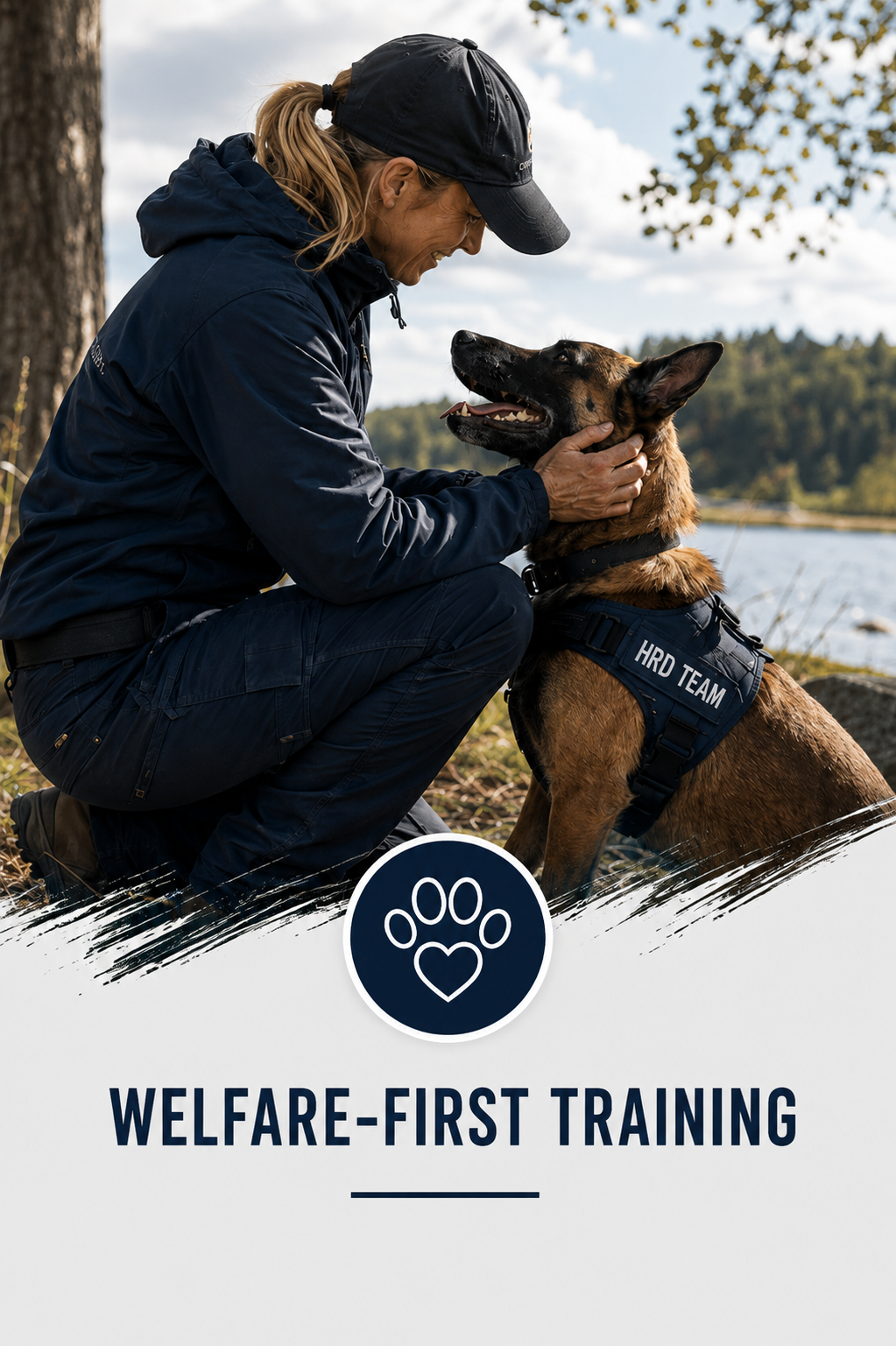
Welfare-first training
Training methods prioritise dog welfare, confidence and sustainable performance, with progression adapted to the individual dog and handler team.
What to Expect from HRD Training
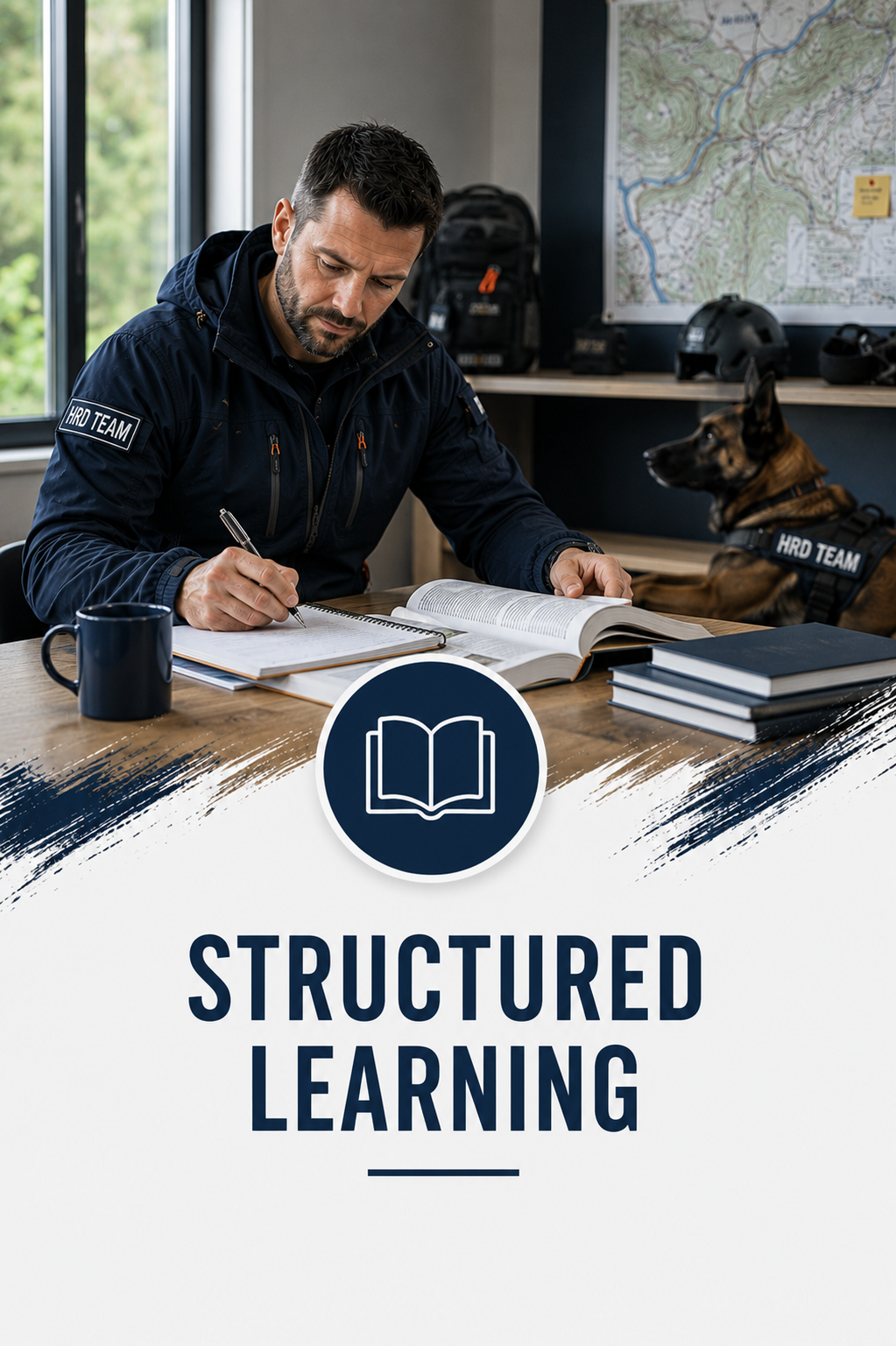
Structured learning
Training follows a clear progression from theoretical knowledge and scent recognition through to practical search exercises in increasingly complex environments.
How HRD Dog Handler Training works
Enquire using our contact form or email
Contact us to discuss your training goals, previous experience, and whether you and your dog are ready to begin HRD training.Suitability check (we clarify goals and experience level)
We assess the dog and handler team to confirm suitability, identify current strengths, and establish the appropriate starting point for training.Training delivery (theory and practical elements)
Training combines theory with progressive practical exercises, developing the dog and handler team across realistic HRD search environments.Assessment & certification (where applicable)
Progress is reviewed against defined training standards, with assessment used to confirm competence and readiness for the next stage of development.
Who the Training Is For
New or developing HRD handlers
Teams wanting clear standards and progression
Handlers preparing for further specialist development
Training Standards & Professional Alignment
Our training is developed with reference to recognised principles and frameworks used across professional search, detection and canine operations. These references help inform our approach to safety, welfare, search methodology, handler development, assessment and professional readiness.
Our training approach draws on relevant principles from:
UK operational and professional frameworks applicable to specialist search and detection dog teams
IRO/FCI International Trial Rules for Search and Rescue Dog Tests, particularly principles relating to handler control, search methodology, canine capability and team performance
INSARAG guidance, where relevant to canine deployment, safety, team readiness and search operations
Relevant British Standards relating to detection dog training, welfare, professional practice and operational considerations
Ready to develop your HRD dog team?
Explore our structured Human Remains Detection training programmes and professional development opportunities.
Professional conduct
Training promotes safe, ethical and professional working practices, with clear expectations for handler responsibility, team conduct and operational awareness.

What the Programme Covers
Core HRD search principles and handler roles and responsibilities
Scent recognition and development of reliable final response behaviour
Search planning, systematic working and handler decision-making
Environmental factors affecting scent movement, including wind, terrain and temperature
Safety awareness, scene conduct and practical risk management
Objective recording, documentation and professional reporting